
Truth as Terrible as Death
On Philip K. Dick's The Man in the High Castle

When I first read The Man in the High Castle, I liked it okay. It was the first Philip K. Dick novel I ever read. This was many years ago, long before I had a full appreciation for PKD. In the time since, I have read about fifteen of his other books, and he has become one of my favorite authors. While I did watch a couple seasons of Amazon’s rather weak adaptation of TMITHC when it aired, I always knew that I needed to return to the source material itself and experience it anew, as a proper Dickhead.
It was a phone call from an old friend who had just read it that convinced me to slot it into my immediate queue. He had a rather novel take that convinced me now was the time to pick High Castle back up. In his reading, the book was not only about AI, but it offered a rather hopeful outlook on the on-going cultural battle that seems to be going anything but our1 way at the moment.
While mostly remembered as an alternative history book about What if the Axis Powers won WWII?, there is a lot more going on in TMITHC than that. It largely takes place in the Japanese-run Pacific States along the west coast of North America where an industry of Americana collecting has taken hold. The Japanese are obsessed with American antiques, and a counterfeit market proliferates. As such, there is much discussion about the authentic vs. the false, historicity, yaddy-yadda, providing ripe ground to explore through a modern AI lens.
But as I got to reading, the United States abducted the President of Venezuela, ICE murdered an innocent woman and began its occupation of Minneapolis, and The White House doubled down on its posturing over a multi-front invasion in which Greenland, Mexico, Iran, and Cuba were all on the table. Suddenly, the AI subtext seemed less important than the surface level question:
Did the Nazis actually win?

Standing at this crossroad wondering which line of inquiry to pursue, I did what I thought Dick would do: I broke out the I Ching.
Book of Changes
The I Ching plays a major role in The Man in the High Castle. Characters are constantly consulting it before taking action, Hawthorn Abendsen co-authors his alt-history within the alt-history with its assistance, and famously Dick himself used it in plotting out the novel.
“We are absurd…because we live by a five-thousand-year-old book. We set it questions as if it were alive. It is alive. As is the Christian Bible; many books are actually alive. Not in metaphoric fashion. Spirit animates them. Do you see?” (70).
In investigating his own work in the Exegesis, Dick hits upon what exactly makes books such as these alive: they introduce something new into an otherwise closed system. This is the whole of Christianity, with the Christ figure as the something new entering the closed system of the world. For Dick, this introduction is the tiny tug that “sets a sequence of mounting, growing changes in motion, ending in massive (total?) enantiodromia: victory. Over world. Since all reality is one field the effects of the initial perturbation end only when the final enantiodromia occurs, and all the ‘counters’ flip over to their opposites” (633-634).
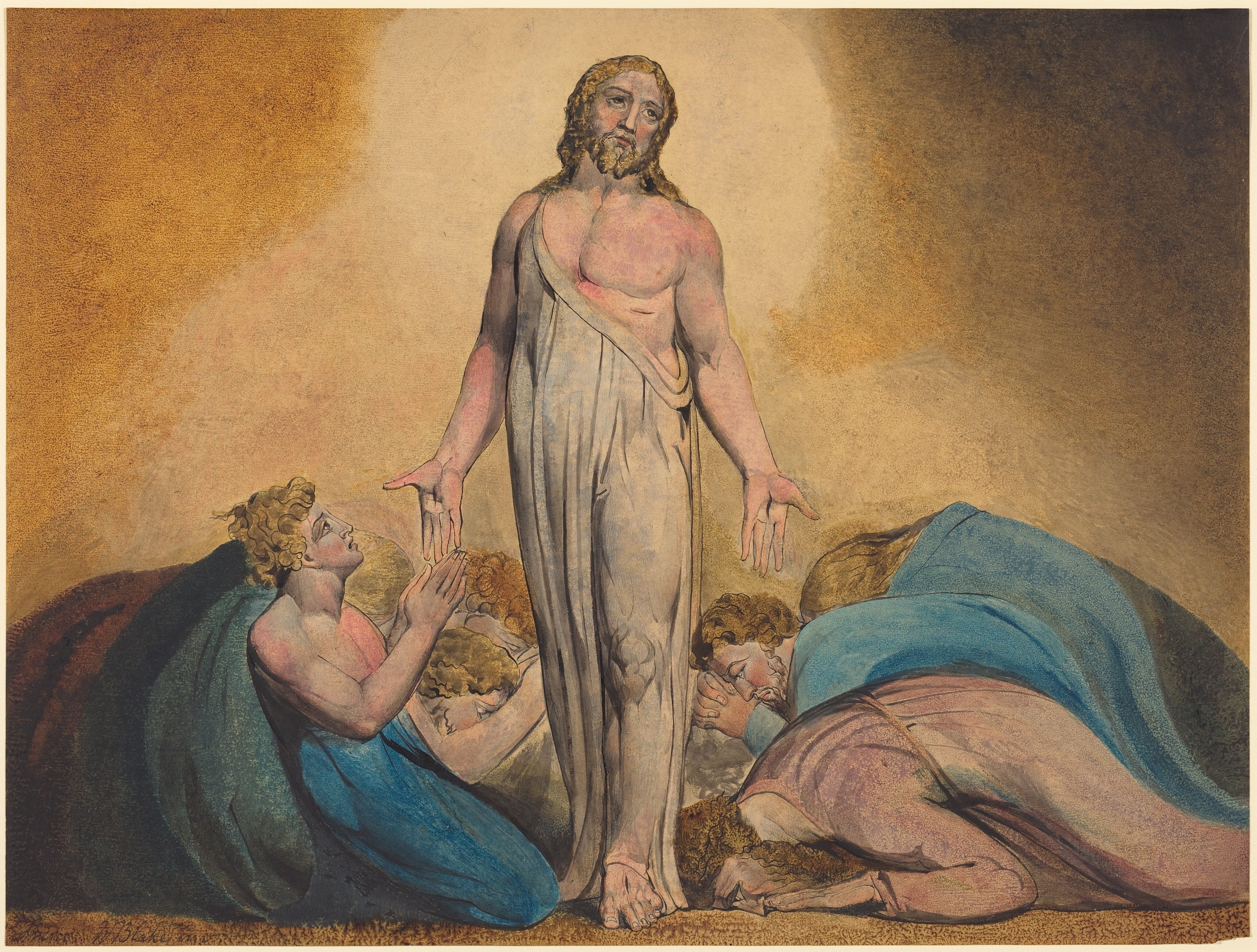
Humbly, I asked The Oracle how I should approach this essay on The Man in the High Castle.
Rather than throwing yarrow stalks, I use the three coin method. By flipping my three pennies six times, I am able to reveal a hexagram. Majority heads is a broken line, majority tails is an unbroken line; three heads is a broken changing line2, and three tails is an unbroken changing line, meaning they flip into their opposite.
I started flipping and revealed my hexagram from bottom up:
Two tails and a head: unbroken line
Three tails: broken changing line
Three tails again: broken changing line
Two tails and a head: unbroken line
Three tails: broken changing line
Two heads and a tail: broken line
This means my original hexagram was 51 Chên, The Arousing.
As anyone who has spent time practicing divination might concur, synchronicities abound, sometimes in a rather Tricksterish way. If there’s a particular card you really don’t want to see during a Tarot reading, it often has a way of showing up. And in my dabbling with the I Ching, something similar seems to occur. Whatever hexagram I receive will appear again elsewhere.
Last year, I read Herman Hesse’s The Glass Bead Game in which the I Ching also features somewhat prominently. This inspired me to dust off my own copy and throw the old coins. I don’t recall the question, but I do remember receiving Hexagram 56, the Wanderer. Then, to get a better hold of the I Ching itself, I put on the Weird Studies episode on it. Not only does the Wanderer show up again here, but both hosts report how this is the hexagram they get most often.
All that to say, it came as no real surprise when the Arousing appeared in The Man in the High Castle.
“God appears in the sign of the Arousing. Thunder and lightning. Sounds—he involuntarily put his fingers up to cover his ears. Ha-ha! Ho-ho! Great burst that made him wince and blink. Lizard scurries sand tiger roars, and out comes God Himself! (164-5).”
Okay, you tricksterish little book, I thought, so of the 64 possible hexagrams you want to reveal one of the handful that is named in the book, that’s fine. This isn’t even my real hexagram. The changing lines mean it becomes something else, so ha—
Ruh roh.
It becomes Hexagram 43 Kuai, Break-through, which also appears in the novel.
I simply laughed as that stomach-twisting feeling of synchronicity coursed through me, and read on. What else could I do?
Break-through is received by Julianna Frink after she murders her Nazi abductor in order to save the author Hawthorn Abendsen. We even got two of the same changing lines. Julianna’s are the second, third, fourth, and sixth while I received lines two, four, and five.
Okay then, I Ching, we can play it that way. I’m not afraid of a few synchronicities.
Unlike the majority of the characters in The Man in the High Castle who have the hexagrams and their meanings memorized, I must consult my physical copy. Flipping through to hexagram 51, I read that “Chên symbolizes the eldest son, the beginning of things in the east—the Spring.” And I understood this to be referring to the original AI essay I had in mind. If I were to stick with the plan, the reading appeared favorable:
“Caution brings good fortune.”
Immediately, it felt the original idea was the way. Writing about the Fourth Reich felt somewhat like discourse-chasing which would cheapen the actual horror of what is happening, but at the same time if it is true that “The Empire Never Ended” then what better time to write about it than when the Empire is acting so brazenly?
Continuing, “Kuai actually means a break-through as when a river bursts its dams in seasons of flood.” Reading from the second hexagram, I imagined the face of American Empire that has managed to stay so well hidden for so many of its citizens even through all the horrors it has committed. The dam providing the body of obscuring waters is now bursting and the face is revealed. Many who would not recognize it in any of its more subtle forms are being affronted by it now for the first time.
“One must make the matter known
At the court of the King.
It must be announced truthfully. Danger.
It is necessary to notify one’s own city.
It does not further to resort to arms.
It furthers one to undertake something.”
Well now that complicates things, for this would indicate I should switch tactics and write the Fourth Reich essay.
Best to read a bit further.
Hm, yes. Right.
Ha, good one, I Ching:
“The weak line symbolizes an inferior man in a high position.”

Now for my changing lines; Nine in the second:
“A cry of alarm. Arms of evening
and at night—fear nothing.
Despite the weapons, no fear—because one
has found the middle way.”
The middle way. This possibly indicates an approach that would take in both, as further confirmed by Nine in the fifth place, the line that is said to be the governing ruler of this hexagram:
“In dealing with weeds,
Firm resolution is necessary.”
All the weeds must be removed, or else they will simply return. The two are not actually separate. I think of the weed I contend with the most in my own garden: bindweed. It is a nasty specimen with a root system that can run for acres. Pulling out one vine does nothing to the plant. All these manifestations arise from the same root.
Alas, they were never two essays, but one.
The Root
Listeners to Michael S. Judge’s podcast, Death is Just Around the Corner, of which I believe there are a few here, will be familiar with his Fourth Reich theory. This is not simply to say Orange Man Bad, Mango Mussolini, Trump is Hitler, etc, but that the United States onboarded whatever was useful from the Nazis following the war. These tools were implemented largely in our intelligence apparatus which has been carrying out covert operations all around the world for the last 80 years, killing untold millions of people, toppling governments, and destabilizing entire societies in the name of American business interests.
History is written by the victors, as they say, so we get to tell ourselves that we are the Good Guys, that our enemies “hate us for our freedom”, and then we spend billions of dollars propagandizing that into consensus reality, and we accept it, receiving as our end of the bargain all the treats, cheap decadence, and relative stability that such ridiculous surplus provides.
As Brad Kelly and David Leo Rice discussed in a recent episode of Method and Madness,
“The narratives of World War II are still the primary narratives…of who’s good and who’s bad. Our whole worldview is about that conflict. We’re stuck in this ambiguous state where it’s like we both never want to return to that…yet we have also been taught that that is the source of meaning; that the only way that a genuine heroism or a genuine move into a new chapter of history can happen is through a genuinely definitive world war.”
So what is the common understanding of the war that forms our primary narrative? That fascism arose in Western Europe in the early twentieth century, largely due to the manic charisma of a couple Really Bad Men, but the powers of liberal democracy (USA, England, and France) were able to eradicate it from the land thanks, in some small part, to a temporary alliance with a questionable force in the east (USSR) who would have to be taken care of after the war, but this could be done in a more civilized fashion (The Cold War), as befitting of the high moral standards of liberal democracy.
In a sense, this bourgeois narrative is the false world we inhabit while a more accurate analysis is akin to the in-breaking of The Grasshopper Lies Heavy, the alt history novel within The Man in the High Castle in which the Allies actually won the war. The book becomes a sensation in Japan and the Japanese-controlled Pacific states, but it is banned in the Greater Reich.
The world of Grasshopper does not map directly onto our own world, as the hinge point in TMITHC is the successful assassination of FDR by Giuseppe Zangara, who really did attempt to shoot the president-elect on February 15, 1933, but failed to pull it off, largely because he was too short to see over the crowd. Had Zangara found his target, Dick foresaw the continuation of both the Depression and the non-intervention policy keeping the US out of the war long enough for Germany to conquer Europe. In this scenario, they then go on to invade the east coast of North America as the Japanese Empire invades the west, and the United States falls, and is split between the two, with a neutral strip in-between called the Rocky Mountain States.
Rather than an alt-history novel, the in-breaking force into the fiction of our own narrative might be considered to be historical materialism. It reveals not exactly that the Axis Powers secretly won World War II, but that our simplistic bourgeois analysis is fraught with inaccuracies. As we touched on way back in our Gravity’s Rainbow piece, the corporations, such as IG Farben, that empowered the Nazi war machine, were not torn up and scattered, nor were the men behind them imprisoned or executed for their horrendous crimes, but rather given a slap on the wrist before being allowed to return to their positions of power, or else they were straight up absorbed into the United States via Operation Paperclip3, which gathered up whatever of Nazi Germany the US found useful and integrated it.
Beyond the aftermath, the war itself was never so clear cut in its two-sidedness. American corporations were not above dealing with German ones. Not only did Standard Oil and General Motors sell the formula for producing the fuel additive tetraethyl lead, a necessary ingredient for powering tanks, planes, and other war machines, but they directly supplied it to the Germans until the Nazis were able to get their own production up and running.
As Gravity’s Rainbow makes clear, the thing that came out of the war was not a victorious nation-state, but something transmogrified. While it still wears the nation-state as a mask, the second half of the twentieth century saw the birth of that which has superseded the state: a cartel of international corporations and intelligence agencies. This is what is meant by fascism.
Gabriel Rockhill goes into great detail about this in his work in Counter Punch:
“A paradigm shift is necessary in order to understand the history of actually existing liberalism and fascism. The latter, as we shall see, far from being eradicated at the end of WWII, was actually repurposed, or rather redeployed, to serve its primary historical function: to destroy godless communism and its threat to the capitalist civilizing mission. Since the colonial projects of Hitler and Mussolini had become so brazen and erratic, as they shifted from playing more or less by the liberal rules of the game to openly breaking them and then running amok, it was understood that the best way to construct the fascist international was to do so under liberal cover, meaning through clandestine operations that maintained a liberal façade. While this probably sounds like hyperbole to those whose understanding of history has been formatted by bourgeois social science, which focuses almost exclusively on visible government and the aforementioned liberal cover, the history of the invisible government of the national security apparatus suggests that fascism, far from being defeated in WWII, was successfully internationalized.”
What’s All This Got to do with AI?
AI is being marketed as a miracle tool, capable of performing basically any task. Even calling it “intelligent” implies that it is as plastic and adaptable as the human mind. While it no doubt has useful technical abilities in specialized fields, it serves only to further enshitify our daily lives. It is not living, in PKD’s sense, because it has no ability to create the New. It can only reshuffle the old into novel formulations. Nonetheless, it is being forced down our throats at every turn. That’s because the one thing it is really good at is making certain people a whole lot of money.
As we discussed in our recent piece on Michael Cisco’s Animal Money, the economy is basically made-up bullshit, but it’s made-up bullshit with real life-or-death consequences for billions of people, so its current total dependence on AI is rather unnerving. Not only has it proven to be a useful tool for imposing precarity on those who have largely been cushioned from it in the past by supposedly putting the vast majority of white collar jobs on the automation chopping block, but according to Harvard economist, Jason Furman, excluding AI, the GDP grew only 0.1% in the first half of the last year.
That is, we are totally stagnant without it, and “it” is a bunch of hot air that a handful of tech billionaires are trying to spin into reality. And folks, I am sorry to report they have had no shortage of success. As readers have no doubt noticed, you can’t even Google something anymore without prompting an AI overview.
Social media is bursting at the seams with AI videos and images, but somehow I am always surprised to find the people who use it actually roam the real world. I suppose that’s the privilege of having cool, creative friends who are staunchly against it. Still, beyond my little bubble, AI is running amok. Upwards of 80% of college students report they are using it to write or assist in writing essays. Far more nefarious than a little bit of college cheating, 16% of adults report having used AI as a “romantic companion”, and a third of children report that using AI chatbots feels like talking to a friend, with 12% reporting they do so because they have no actual friends. If you thought the rich veins of the Loneliness Epidemic had already been mined out by vulturistic endeavors, I hate to break it to you, but we are just getting started. Meet friend.com, a wearable-AI necklace that one can chat with throughout the day.
The Empire may not have ended, but it has come home, and now we are the surplus to be extracted for profit. All of this is meant to destabilize society, ensuring that whatever workers cannot be replaced by AI at least feel the pressure of precarity, so that they will think twice before stepping out of line. Solidarity is being gutted as the line between friends and chatbots is blurred. Any cultural investment in the arts has been foreclosed upon. And the endless drip feeding of AI content has blurred reality itself.
As we have said, The Man in the High Castle concerns itself deeply with questions of the authentic vs. the false. For example, the occupying Japanese have developed an obsession for collecting American antiques from before the war. Use-value be damned. Any old thing, from a Mickey Mouse watch to a butter churn, becomes covetable simply by virtue of its historicity.
To satisfy this obsession, and to enrich themselves in the process, manufacturers have begun a whole underground industry of fabricating replica antiques.
“The factories…turned out the pieces, they made their profits. The wholesalers passed them on, and the dealers displayed and advertised them. The collectors shelled out their money and carried their purchases happily home, to impress their associates, friends, and mistresses” (48).
Frank Frink, who has just quit one of these factories, finds himself wondering if the collectors have ever even asked themselves if the objects are genuine. When he and his old foreman, Ed McCarthy, go into business together, producing custom, original American art, something that has not happened since the war, they use their insider knowledge of the counterfeit trade as leverage to get seed money from their old boss, Wyndam-Matson, threatening to blow up the whole scheme if he doesn’t fork over what they need to start up their own business.
Old Wyndam does what he must to protect the integrity of the counterfeit trade, and the boys get to making some jewelry.
Antique dealer, R. Childan, agrees to display this new line of EdFrank pieces in his shop, on consignment that is—a real insult. But his seller’s instincts prove right, for a time. There is no organic interest in the art objects until Childan gifts a piece to a client, hoping to impress this client’s wife. When Childan meets his client again, he asks about the piece, and his client confesses that he did not give it to his wife. Instead, he had showed it to business acquaintances, fellow collectors of American antiques, and they had laughed at it, and, the client admits, he had initially laughed along with them, but the piece slowly worked on him.
“I have for several days now inspected it, and for no logical reason I feel a certain emotional fondness. Why is that? I may ask. I do not even now project onto this blob, as in psychological German tests, my own psyche. I still see no shapes or forms. But it somehow partakes of Tao. You see?…It is balanced. The forces within this piece are stabilized. At rest. So to speak, this object has made its peace with the universe. It has separated from it and hence has managed to come to homeostasis” (175).
These art pieces act, like the I Ching or the Bible, as an in-breaking force that is able to deliver something New into a closed system. As JF Martel writes in Reclaiming Art in the Age of Artifice, “The power of art is opposed to illusion” (51). In fact, it is through studying one of these EdFrank art pieces that Tagomi finds himself transported from his false world to our authentic one. In something of a darkly comedic scene, he is made aware he is in our world through police interference, heavy traffic, racism, and an ugly ass highway system.
It may not be pretty, but at least it is real and somewhere within us there seems to be a longing for that authenticity.

That is why The Grasshopper Lies Heavy is such a sensation. It reveals reality. When Julianna asks the Oracle why Abseden wrote it, she receives Hexagram 61: Chung Fu, Inner Truth. It is all the proof she needs that the book shows what is real, that Germany and Japan lost the war. This means the characters’ reality is false, but even the author who revealed this truth is unable to face that fact. Though he seems to believe it on some level, he is quick to turn away.
When confronted by a truth that challenges your whole reality-system, turning away is by far the easier option. This cognitive dissonance is what has driven followers of both the Democratic and Republican parties totally bonkers. It’s hard to face the truth of being complicit in a world-historic evil empire. And to be fair, everything has been invested against our seeing it, and if we do see it, they have doubled down against our ability to do anything about it. I feel as if I see it well enough, and yet what do I do? I continue to live about as cushy a life as the combined paychecks of a barista and a public school teacher can buy.
What is it that Jesus said? That the truth will set you free?
I wonder what he was on about.
[Exit Music]
Our here meaning those of us who would rather not see large language models replace human art, creativity, and the capacity for critical thought.
Each Hexagram offers a Sequence, a Judgement, an Image, and six Lines. The changing, or moving, lines should be paid special attention.
Get it? The parts of the Third Reich that we found valuable became attached to us, as if by a paperclip that would go onto grow into something more like a biological suture.
Gnostic Pulp readers 🤝 MSJ listeners
Huzzah! PKD wins again! This is one of his few I *haven't* read yet, but now I think I'll bump it up.
The fabrication stuff reminds me of "Electric Sheep" where people need to get robot animals, not to remember nature, but as status symbols that they can afford such luxuries. The repair guy comes to get a dying cat, thinking it's a broken robot, and only as it dies does he realize he's been touching a real living thing the whole time (and has a classic Dick breakdown).
Great job tying it all together! The Oracle holds the thread while we loom it around the disparate pieces!